The back story
From North Bridge to Multrees Walk: Edinburgh’s shopping streets, the back story
Kiltmakers since 1868, a 200-year-old saleroom and a galleria by Waverley: how Edinburgh shops.

Edinburgh shops as it was planned: in two towns. The Georgian New Town gave the city its grand streets and squares, now home to Multrees Walk, Harvey Nichols and a canopy-roofed galleria; the Old Town keeps the whisky merchants, vintage rails and kiltmakers with a century and more behind them. Here is the back story, from a tailor on North Bridge in 1868 to an auction house turning 200.
A planned town goes shopping
Edinburgh’s smartest shopping streets were drawn on paper first. The New Town, master-planned by James Craig after he won a competition to design it, was designed in 1767 and is the largest and best-preserved example of Georgian town planning in the UK. In the 18th and 19th centuries it became a haven for writers, printers and publishers; today its squares sell fashion as readily as they once sold books.
St Andrew Square is the luxury corner. Harvey Nichols stands on the square beside Multrees Walk, a pedestrian street that calls itself the definition of luxury retail in Scotland and the home of the country’s only Louis Vuitton and Gucci, in its own words. A few steps away, St James Quarter opens a naturally ventilated, canopy-roofed galleria of more than 80 brands, two minutes’ walk from Waverley.
Above it, the W Edinburgh’s ribbon design, the Quarter explains, represents printing-press paper unspooling: a nod to the publishers who once worked these streets. Edinburgh has always liked its new buildings to carry a footnote.
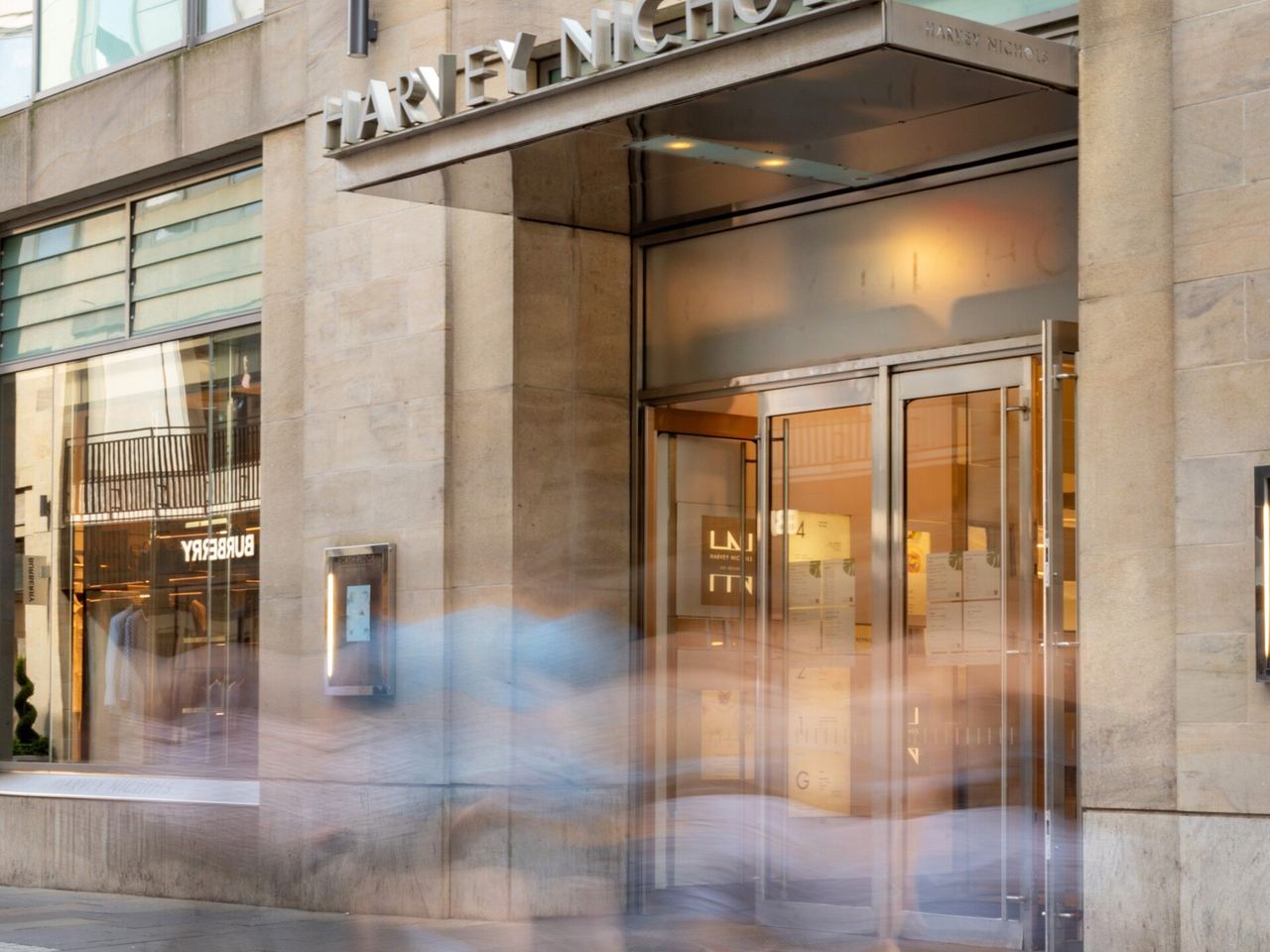
Photo Credit
Image courtesy of © Multrees WalkTartan and tweed
Highland dress has deep roots here. Kinloch Anderson began in 1868 on North Bridge, when the tailor William Anderson made clothes for the gentlemen of the city and soon became known for military uniforms. Still family-owned, now led by the sixth generation from Leith, it makes its kilts in its own Leith factory and received the Royal Warrant of King Charles III in 2024. 21st Century Kilts makes modern kilts by appointment.
Johnstons of Elgin goes back further still. In 1797 Alexander Johnston, aged 23, founded a woollen mill in Elgin and drummed up trade by travelling the length of Scotland in a small horse-drawn gig; the firm still makes cashmere, merino and tweed in Scotland, with a shop in Edinburgh. Some brands sell heritage. This one simply never stopped weaving.
In the Old Town, W. Armstrong & Son was founded in 1840 by William Armstrong, selling traditional menswear from a small shop in the Cowgate. It now calls itself one of the UK’s oldest vintage clothing stores, with a flagship on the Grassmarket: an Edinburgh vintage rail is where good tailoring goes to start its second life. Godiva Boutique, nearby, mixes ethical, local designers with hand-picked vintage.
An Edinburgh vintage rail is where good tailoring goes to start its second life.
A dram and a wedge
Whisky is the souvenir Edinburgh does best. Royal Mile Whiskies began in 1991 as a single shop on the Royal Mile, and Wm Cadenhead, which calls itself Scotland’s oldest independent bottler, has bottled under its own name since 1842, in Aberdeen at first and in Campbeltown since 1972; its Edinburgh shop is on the Royal Mile. A Cadenhead bottle is a cask with its own biography.
Cheese has its own address. I.J. Mellis, established in 1993, hand-cuts farmhouse and artisan cheese to order from its Edinburgh cellars and shops, and the Edinburgh Farmers’ Market on Castle Terrace and Stockbridge Market bring growers and makers to the street. Edinburgh shopping, it turns out, is as much about the larder as the wardrobe.
Under the hammer
The oldest trade of all may be selling things twice. Lyon & Turnbull traces its origins to 1826, when Jonathan Lyon, a former spirit merchant, first advertised as an auctioneer on Market Street; in 1863 his son William went into partnership with William Elliot Turnbull. Two hundred years on, the firm holds specialist sales in Edinburgh, London and online, and Topping & Company keeps the city’s bookish streak alive with its shop and events.
Our advice: shop the New Town on a weekday morning, from St Andrew Square through Multrees Walk to St James Quarter, then walk up to the Old Town for whisky, tweed and vintage. Allow time for a kilt fitting, and book ahead if you want one made. Check Lyon & Turnbull’s calendar for public viewings before a sale.
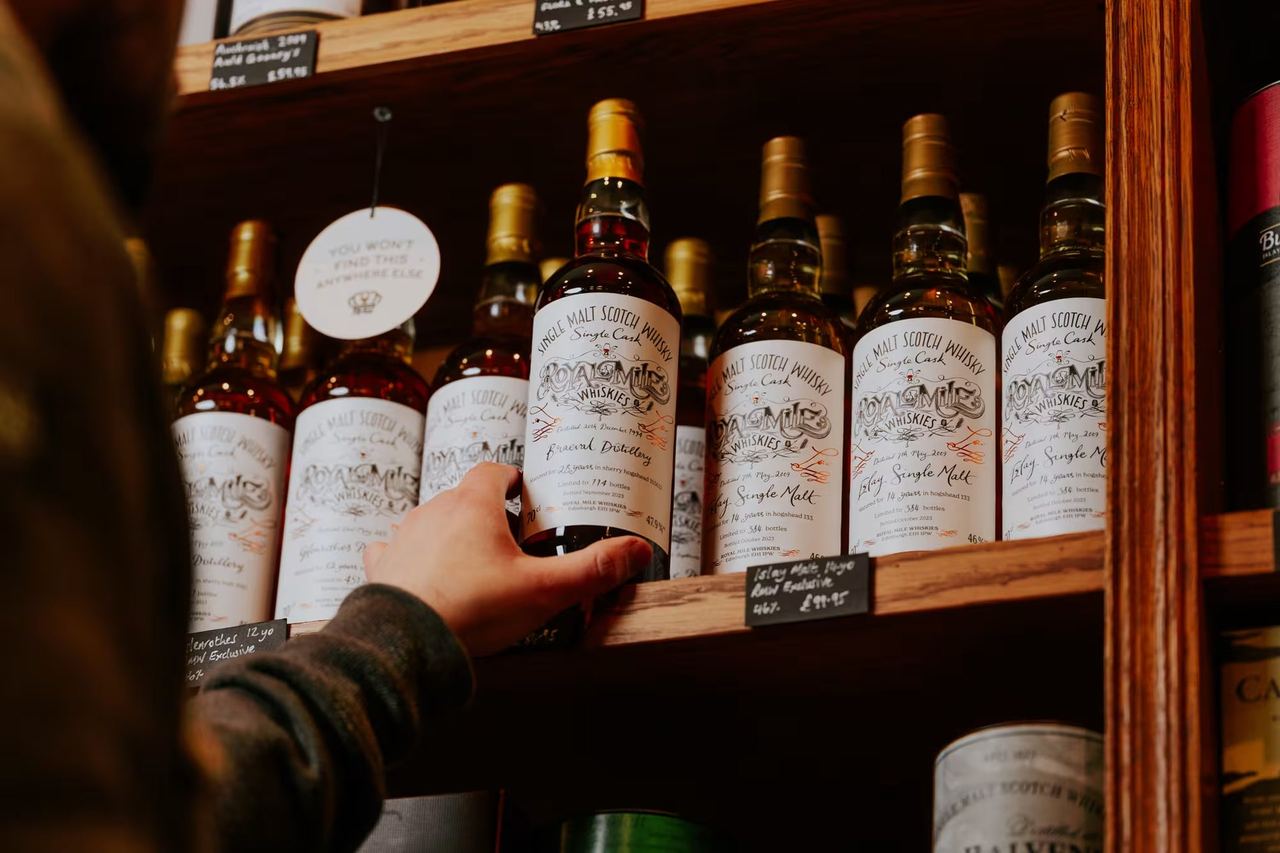
Photo Credit
Image courtesy of © Royal Mile WhiskiesWhy it's on our list
- A planned town goes shopping
- Tartan and tweed
- A dram and a wedge
- Under the hammer
Location
The map comes from Google Maps, which sets its own cookies once it loads.
More in depth
 The back storyEdinburgh by tram, bus and trainThe tram, buses, trains and the Caledonian Sleeper.
 Coming soonComing soon: the tech the makers have promisedOfficially announced tech, from Gemini glasses to Meta's VR specs, plus the newest arrivals.
 CompareAirPods Pro 3 vs the rest: noise-cancelling earbuds comparedAirPods Pro 3 against AirPods 5, Sony WF-1000XM6 and Bose QuietComfort Ultra Earbuds.