The back story
Gilded ceilings and single casks: Edinburgh’s drinking culture, the back story
Temperance-era palaces, a gas showroom turned oyster bar and a 1787 bond: how Edinburgh drinks.
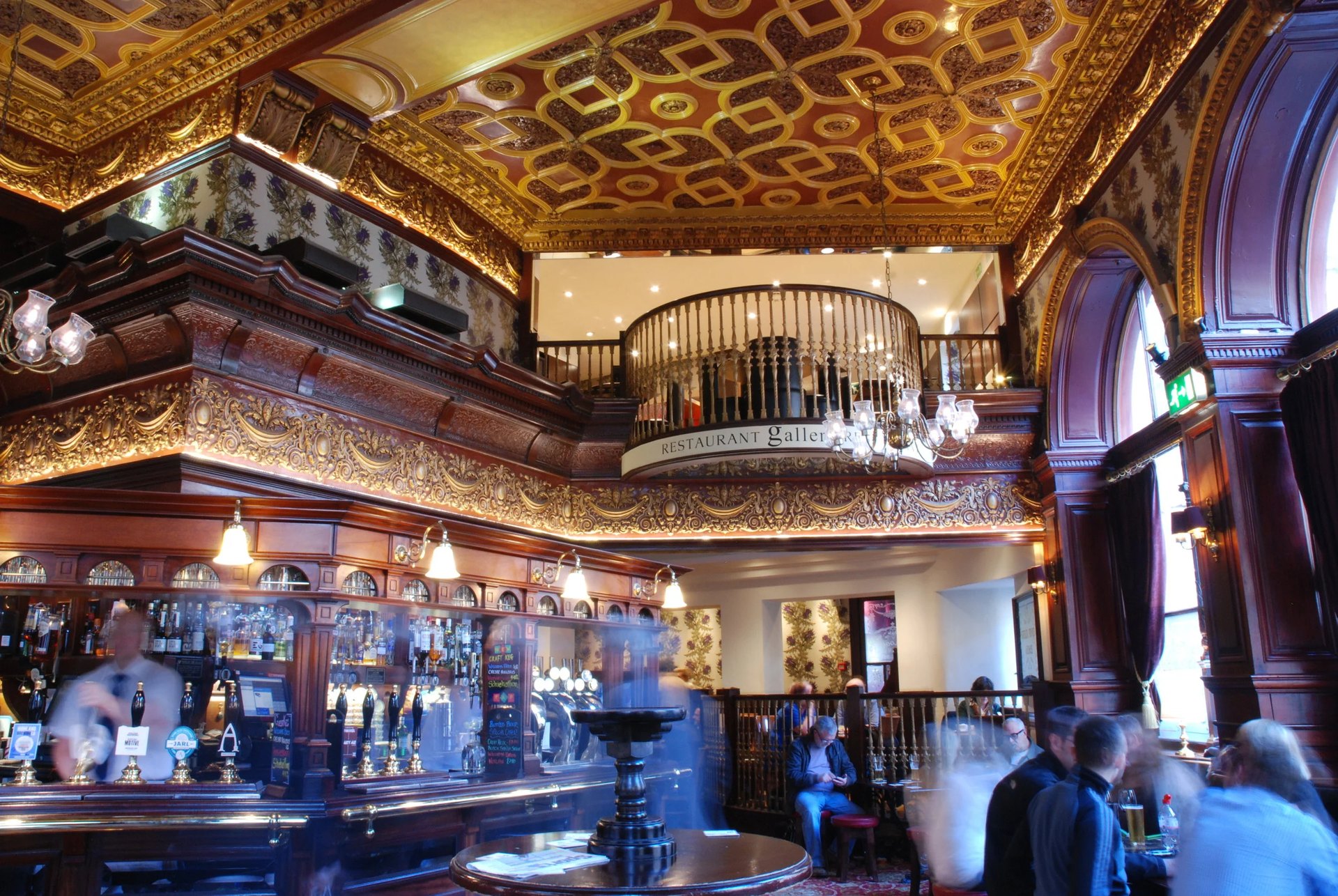
Photo Credit
Image courtesy of © The Guildford ArmsEdinburgh’s finest bar rooms were built while the temperance movement was at its height. Publicans answered it with mahogany and plaster; a gas showroom became an oyster bar lined with inventors; a Leith wine bond became the home of a whisky society; and a new generation of cocktail bars took to basements. Here is the back story, from the island bars of West Register Street to the cellars of the New Town.
Palaces built in a dry age
Here is the paradox at the heart of Edinburgh’s pubs: its most opulent bars went up at the height of the temperance movement. Between about 1880 and 1910 a breed of luxurious pubs was built, now remembered as the Golden Age of Scottish pub design, and without the pressure of the anti-drink lobby, their owners suggest, publicans would hardly have spent such sums. The dark bars before them had ceilings often within reach of a man’s arm.
The Guildford Arms on West Register Street, designed by Robert Macfarlane Cameron, was established in 1896 and has stayed in one family ever since. Its island counter went in alterations in 1940, but the Jacobean-style ceiling still dominates the public bar, with a bank of ten real ale fonts with blue porcelain handles beneath it. It took a movement against drink to give Edinburgh some of its finest rooms for it.
On Rose Street, the Abbotsford is named after Sir Walter Scott’s house in Roxburghshire. In 1902 the old bar was demolished and Jenners, then adding to its store, commissioned the pub architect P.L. Henderson to design a new one: an island bar carved from Spanish mahogany under a Jacobean ceiling. It was known to music hall performers from the Empire, the Lyceum and the Royal, and in the 1950s and 60s the Rose Street poets made it their haunt.
The inventors’ bar
The Cafe Royal, on West Register Street, began as something else entirely. Robert Paterson designed the building in 1861 with a ground floor intended as a gas showroom for its owner, Robert Hume & Co., but it was converted into the Cafe Royal Hotel and Oyster Bar before it opened. Historic Environment Scotland calls it probably the first mansard of its kind in central Edinburgh.
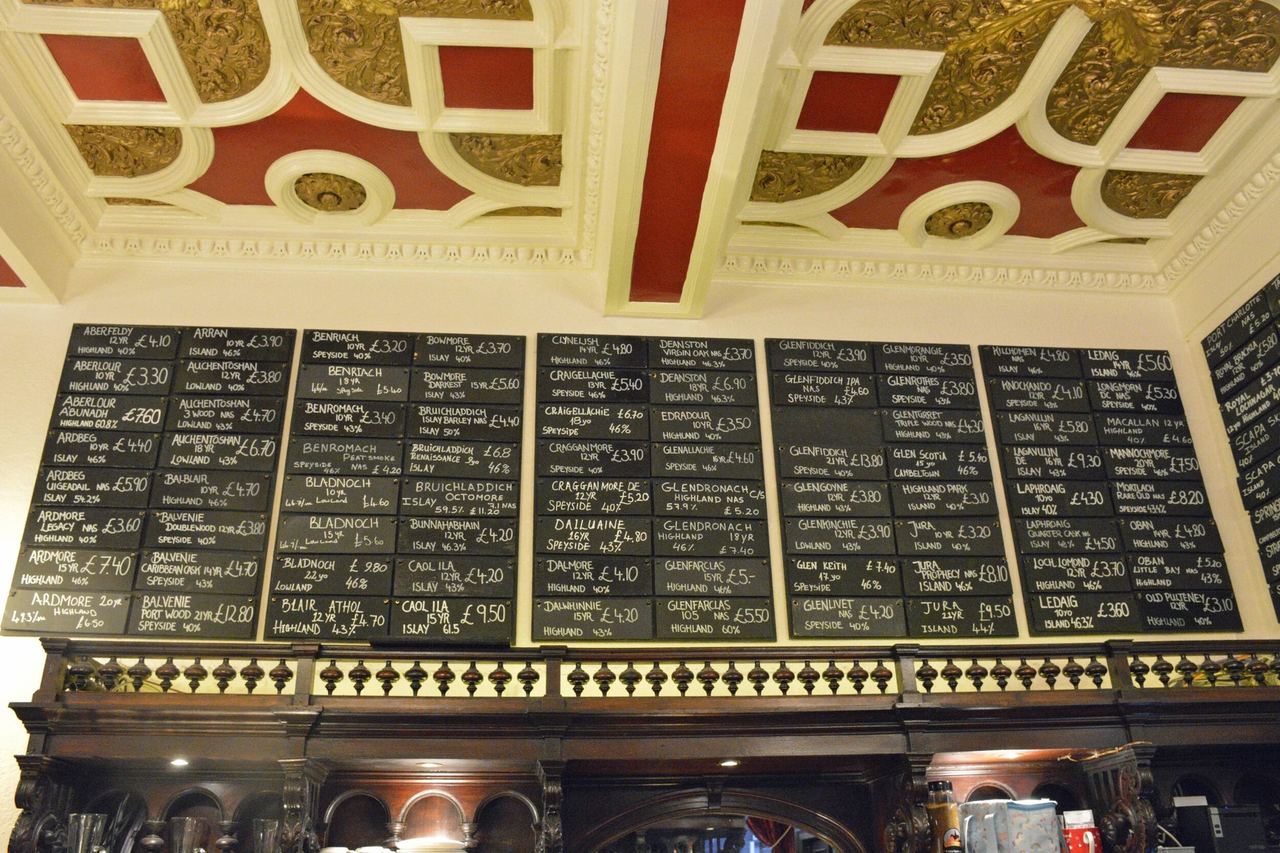
Photo Credit
Image courtesy of © The AbbotsfordInside, the bar is lined with six large Doulton tile pictures of famous inventors, designed by John Eyre and shown at the Inventions Exhibition of 1885; in the Oyster Bar, stained-glass windows celebrate British sportsmen. A building meant to sell gas fittings ended up as a gallery of bright ideas, which is the better trade: inventors, unlike gas mantles, never need replacing.
Whisky by the cask
Whisky has its own temples. In Leith, the Scotch Malt Whisky Society has made The Vaults its home since 1983: a building completed in 1787 as a wine merchants’ bonded warehouse, now its whisky bar and members’ rooms, pouring single-cask whisky and spirits. The Society calls it its spiritual home, which in a former bond is less a metaphor than a job description.
It took a movement against drink to give Edinburgh some of its finest rooms for it.
In the Old Town, the Bow Bar on Victoria Street sticks to real ale and whisky, and the Devil’s Advocate, tucked away on Advocate’s Close, keeps over 300 Scottish and world whiskies behind its stone walls, with seasonal Scottish dishes to steady the tasting. Its historic building means stairs: in this part of town, even the dram has to be climbed to.

Photo Credit
Image courtesy of © Reading Tom from Reading, UK · CC BY 2.0 via Wikimedia CommonsThe cocktail generation
The cocktail came later and went underground. Dragonfly, on West Port, calls itself Edinburgh’s oldest cocktail bar; Bramble is a basement bar and lounge at 16a Queen Street, walk-ins only; and Panda & Sons was opened in 2013 by the bartender Iain McPherson and his family, aiming at a welcome for everyone and fine Scottish hospitality.
The newer rooms keep the old instinct for theatre. Lucky Liquor Co pours everything from classics to its own signature drinks beneath shelves of records, and Hey Palu, an Italian cocktail bar, glows on Morrison Street at night. The Victorian publicans built palaces to outshine the temperance halls; their successors build small, dark rooms that feel like secrets. Both are selling the same thing: a few hours somewhere else.
Our advice: start at the Cafe Royal and the Guildford Arms, both on West Register Street behind Princes Street, then walk to the Abbotsford on Rose Street. Bramble takes walk-ins only, so go early in the evening; tables at The Vaults can be booked. In the Old Town, wear shoes made for stairs and closes.
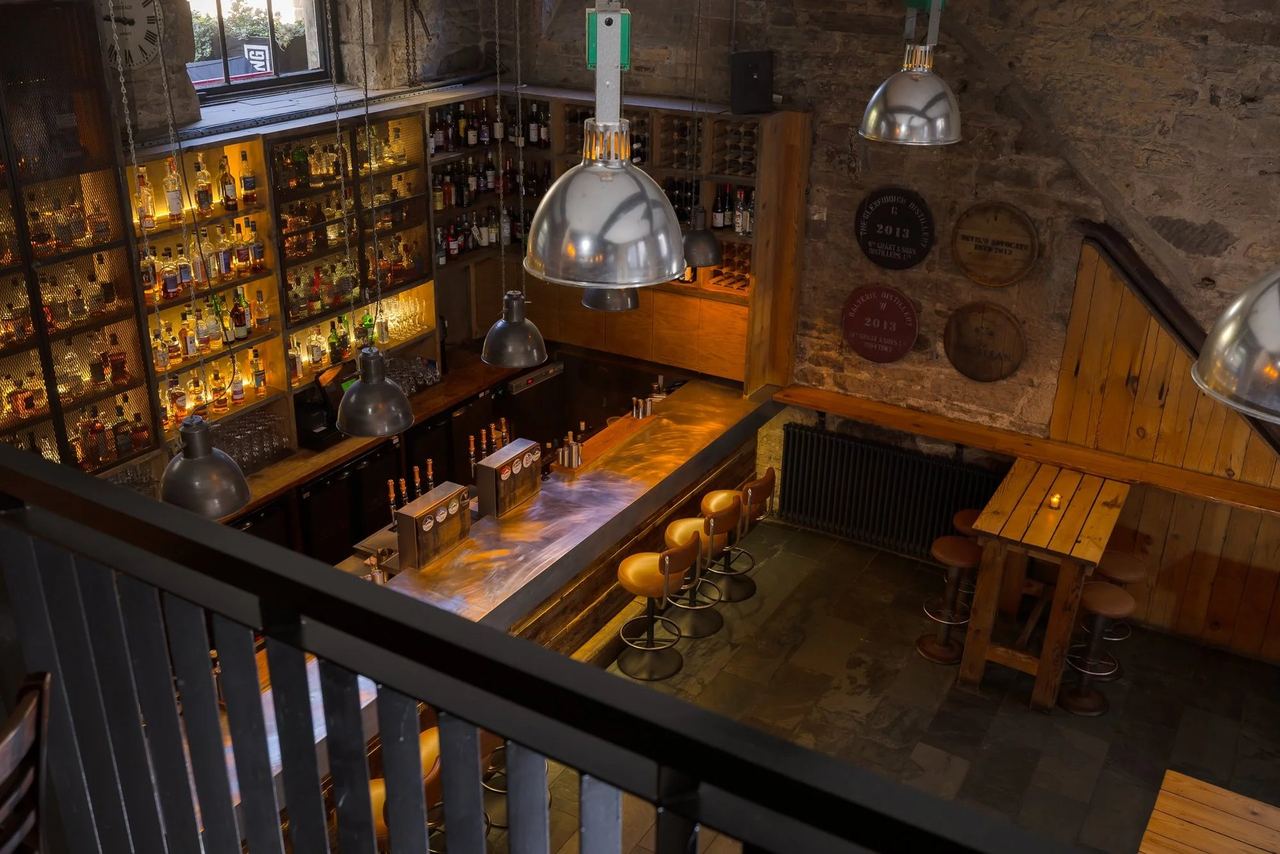
Photo Credit
Image courtesy of © The Devil’s AdvocateWhy it's on our list
- Palaces built in a dry age
- The inventors’ bar
- Whisky by the cask
- The cocktail generation
Location
The map comes from Google Maps, which sets its own cookies once it loads.
More in depth
 The back storyEdinburgh’s grand hotels, from the Balmoral clock to the WitcheryFrom the Balmoral to Prestonfield: where to stay.
 The back storyEdinburgh, a city of two townsThe medieval Old Town and Georgian New Town, a World Heritage Site.
 The back storyEdinburgh, the festival cityThe August festivals, and the galleries and theatres all year.